Deutsch
 English









The development of GABEK was prepared by a series of experiments conducted by Josef Zelger at the Institute of Philosophy at the University of Innsbruck for problem solving in groups. In 1986-1988, the Procedures for creative self-organization, with which conflicts can be dealt with in small groups of 4 to 16 people:
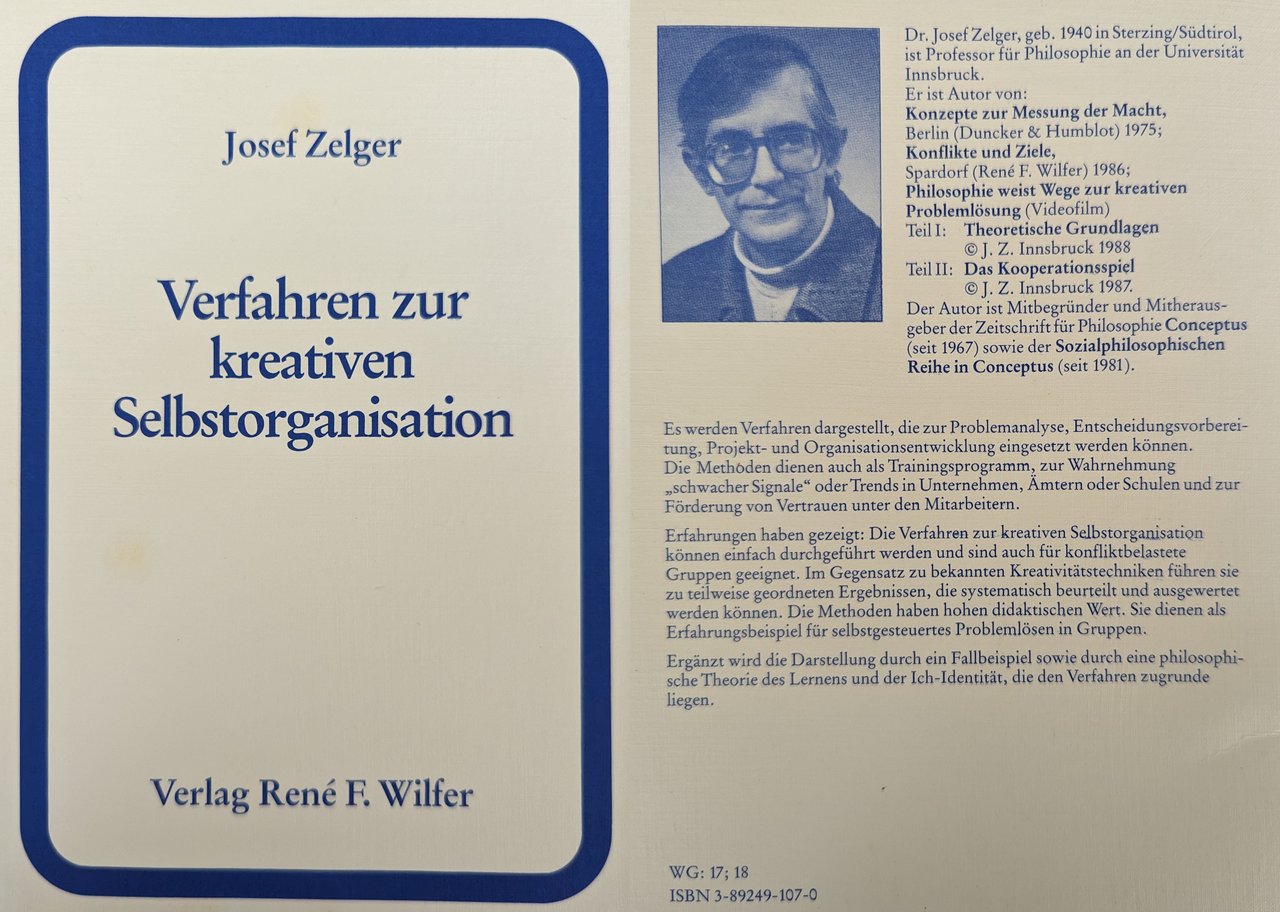
Das Procedures for creative self-organization is based on a set of formal rules of social decision-making. This is seen as a process in which many ideal partial results are produced one after the other and in dependence on each other. 2) Individual participants are given the task of looking for further ideas about the current preliminary products of two other people. 3) Information on intermediate products is transmitted cyclically within the group as a whole, so that partial results are continuously further developed. (See video: The method of creative self-organization, Part I: Theoretical foundations with an application example in a carpentry shop and Josef Zelger: method for creative self-organization, René F. Wilfer Verlag, Spardorf, 1988, pp. 1-16).
Das Procedures for creative self-organization is aligned with the guiding principle of the University of Innsbruck: As a university, we create spaces for free, creative and daring thinking and open up a wide range of opportunities through comprehensive education. We promote this through participation, cooperation, trust and transparency in the democratic self-image. (Guideline of the University of Innsbruck). See the video: The method of creative self-organization Part II: Application example “Women versus men” and report on this application with students in: Josef Zelger: Verfahren zur kreative Selbstorganisation, René F. Wilfer Verlag, Spardorf, 1988, pp. -16-27.
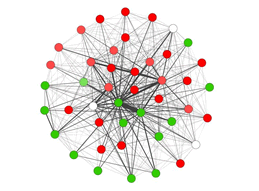
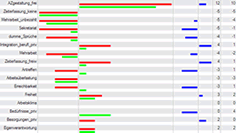
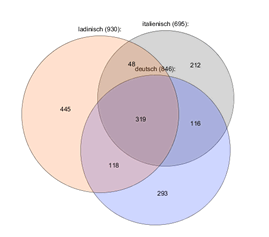
There they are Implementation of the creative self-organization process is limited to small groups of 4 to 16 people and requires the consent to cooperate, was later introduced with the same objective GABEC procedure developed. GABEK serves conflict resolution and decision-making in large social organizations and institutions. As a prerequisite, only any texts from members about how they view the situation subjectively are required. This enables many further applications. (see video and Josef Zelger: Research and Development of Communities). Handbook for qualitative text analysis and knowledge organization with GABEK, Wiesbaden, Springer, 2019.
As a combination of the process of creative self-organization and the software-supported process GABEK New avenues of cooperation between stakeholders will open up, even if they have different objectives. At the moment this is Silent dialogue procedure“in development, which requires only repeated reformulations of questions and repeated collection of responses from stakeholders involved.” As a result of such a combined approach, one can expect an integrated overall development of the stakeholders involved.