 Deutsch
 English





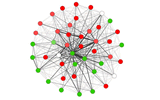

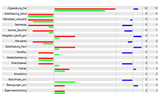
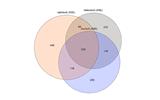



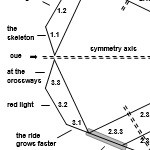
Through GABEK-Analysis of one fantasy, the following heuristic theses are formulated: Fantasies connect eidetic ideas to gestalt-like wholes. They consist of many parts which in turn contain smaller elements. However, they are structured clearly, showing surprising symmetries between parts that are interconnected by recurring motifs. New and unique contents emerge in the central areas of fantasies, which break the symmetries and emphasize new motifs.
Category publications
Twelve Steps of GABEK WinRelan
A Procedure for Qualitative Opinion Research, Knowledge Organization and Systems Development
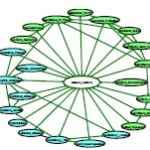
This paper gives an overview of the method GABEK and its computer implementation WinRelan. The main twelve steps of the analysis of unstructured verbal data are presented. Moreover an insight into theory-related and practice-related aspects of a GABEKWinRelan study are discussed.
Workshop “Corporate Semantic Web” – Leibniz Center for Computer Science
The semi-automatic recording of central meaning relationships in extensive texts

“The semi-automatic recording of central meaning relationships in extensive texts” was a lecture by Josef Zelger at Schloss Dagstuhl, the Leibniz Center for Computer Science as part of the workshop “Corporate Semantic Web”, which Börtecin Ege, Thomas Hoppe, Bernhard Humm and Anatol Reibold had initiated.
Corporate Semantic Web
How Semantic Applications Benefit Businesses. With a contribution by Josef Zelger
“Corporate Semantic Web” – this is about semantic applications, the use of which creates concrete benefits for customers and employees of companies. The authors, renowned experts from industry and science, report on their [...]
GABEK VI – Socially responsible decision-making processes
Socially responsible decision making processes
The volume GABEK® VI deals thematically with guidance on socially responsible decision-making processes.
GABEK V. Values in Organizations and Society
GABEK V. Values in Organizations and Society
This anthology describes projects in which evaluations of the affected persons are reflected. It is an invitation to dialogue about the values, goals and development possibilities of individual people, but also of different organizations.
GABEK IV – Linguistic Structures, Theory and Application
Linguistic Structures, Theory and Practice
This anthology contains, in addition to some additional contributions, the results of the VII. International GABEK® Symposiums. In the first part, the authors deal with linguistic structures that promote the learning, understanding and remembering of experience [...]
Collegial organizational development with GABEK®
Case study on school development in Bremen and Bremerhaven

With the project “Further development of vocational schools to regional vocational training centers (ReBiz)”, the state of Bremen has initiated a reform process with the aim of strengthening the self-management of vocational schools. At the heart of the [...]
GABEK III – Organizations and their Knowledge Networks
Organisations and their Knowledge Nets
In order to understand an organization, people’s relationships with each other, their knowledge, basic beliefs and goals must be perceived and understood. This is the purpose of the GABEK® procedure (complete management of complexity). It allows a representation of conceptual and knowledge networks of an organization and their interpretation.
Learning and Development in Organizations
Learning and Development in Organizations
Favorable organizational development requires learning processes of organization members. To stimulate learning processes, one can start from the experience that the affected persons have had. Experience consists in the networking of perceptual, evaluation and knowledge elements, which has proven itself in many different situations. For this reason, the present volume shows how networks of perceptual, evaluation and knowledge elements can be analyzed and represented by the GABEK method.