

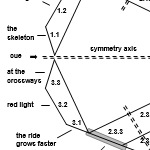
Through GABEK-Analysis of one fantasy, the following heuristic theses are formulated: Fantasies connect eidetic ideas to gestalt-like wholes. They consist of many parts which in turn contain smaller elements. However, they are structured clearly, showing surprising symmetries between parts that are interconnected by recurring motifs. New and unique contents emerge in the central areas of fantasies, which break the symmetries and emphasize new motifs.
Category downloads
Twelve Steps of GABEK WinRelan
A Procedure for Qualitative Opinion Research, Knowledge Organization and Systems Development
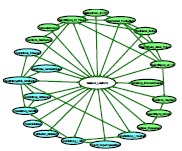
This paper gives an overview of the method GABEK and its computer implementation WinRelan. The main twelve steps of the analysis of unstructured verbal data are presented. Moreover an insight into theory-related and practice-related aspects of a GABEKWinRelan study are discussed.
Workshop “Corporate Semantic Web” – Leibniz Center for Computer Science
The semi-automatic recording of central meaning relationships in extensive texts
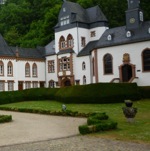
“The semi-automatic recording of central meaning relationships in extensive texts” was a lecture by Josef Zelger at Schloss Dagstuhl, the Leibniz Center for Computer Science as part of the workshop “Corporate Semantic Web”, which Börtecin Ege, Thomas Hoppe, Bernhard Humm and Anatol Reibold had initiated.
WinRelan Project Export with RELXporter
Advanced statistics, network analysis and visualization
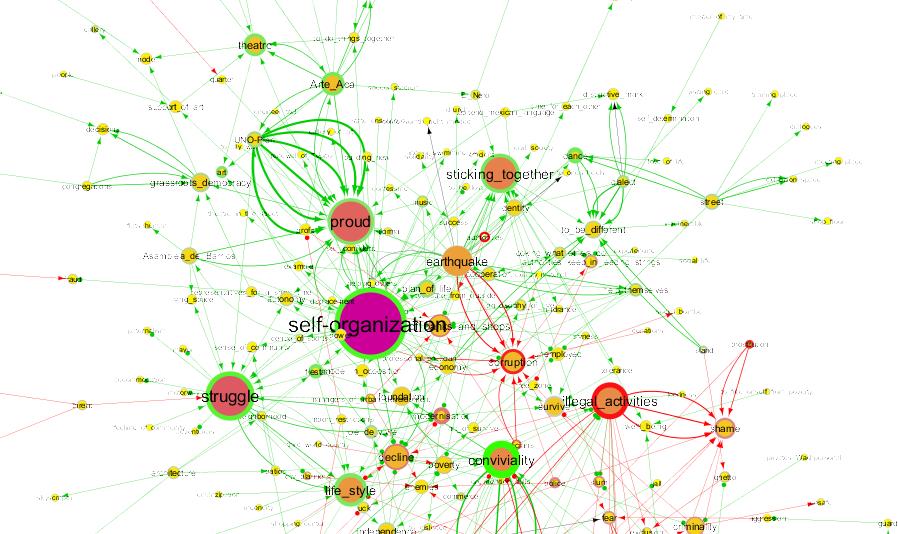
The RELXporter tool enables the export of WinRelan project files to the file formats XLSX (Excel) XGMML (Cytoscape), and GEXF (Gephi). In addition to the known parameters such as relevance number, number of evaluations [...]
GABEK networks as tools to support decision-making processes in complex social situations
preprint 107
An example shows how decision-making processes in organizations, communities, companies can be improved by applying semantic networks.
GABEK® – videos
GABEK® is a PC-assisted method of qualitative research and text analysis (QDA). Based on open interviews or other verbal data, experiences, knowledge and attitudes of many people are networked so that a well-founded overview is created.
Collegial organizational development with GABEK®
Case study on school development in Bremen and Bremerhaven

With the project “Further development of vocational schools to regional vocational training centers (ReBiz)”, the state of Bremen has initiated a reform process with the aim of strengthening the self-management of vocational schools. At the heart of the [...]
Structures of reasoning in the Wittgenstein estate MS 115
The Wittgenstein Archives at the University of Bergen (WAB)

There is a need for a short and clear presentation of the Wittgenstein estate. So one might ask how the topics that Wittgenstein occupied in his series "Philosophical Remarks" are related in an argumentative way.
Qualitative research by the GABEK® method
in Qualitative Research – Different Perspectives – Emerging Trends, 2004
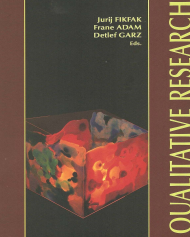
It is one of the central tasks of the social sciences and humanities to show ways and means of creatively processing complex problems in our society. Such problems are generally unstructured and difficult to define. Frequently they are tied to dynamic situations affecting a large number of individuals or groups of individuals. On the other hand, the experiences gained by those affected, e.g. the employees of an institution, contain creative problem solving potential.
Qualitative Research by the method GABEK
Josef Zelger, Preprint Nr. 78, February 2003
It is one of the central tasks of the social sciences and humanities to show ways and means of creatively processing complex problems in our society. Such problems are generally unstructured and difficult [...]
 Deutsch
 English