 Deutsch
 English




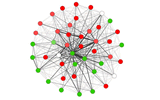


Through GABEK-Analysis of one fantasy, the following heuristic theses are formulated: Fantasies connect eidetic ideas to gestalt-like wholes. They consist of many parts which in turn contain smaller elements. However, they are structured clearly, showing surprising symmetries between parts that are interconnected by recurring motifs. New and unique contents emerge in the central areas of fantasies, which break the symmetries and emphasize new motifs.
Based on the GABEK analysis of a fantasy, the following heuristic theses are formulated: fantasies bring pictorial ideas into a figurative context. They are clearly structured. Fantasies consist of many parts that can be separated from each other in terms of content, which in turn comprise smaller elements. Fantasies have surprising symmetries between their parts, which are interconnected several times. This close network between the contents of a fantasy comes about through repetition of motifs. In central areas of the imagination, content emerges that is unique and new. This breaks through the symmetry and highlights unique motifs.
Keywords: Fantasies, Gabek®, Qualitative Data Analysis (QDA), linguistic gestalt building, narrative text analysis
Download (PDF): Preprint109 The formal structure of a fantasy